Circularity & Waste
We are working to reduce waste in our data centers, offices and consumer hardware by applying circular design strategies across our operations.

90%
Our circularity and waste strategy includes designing products and equipment with modularity, reuse, retrofitting, dematerialization, more sustainable materials, and extended lifecycles in mind.
Data center circularity
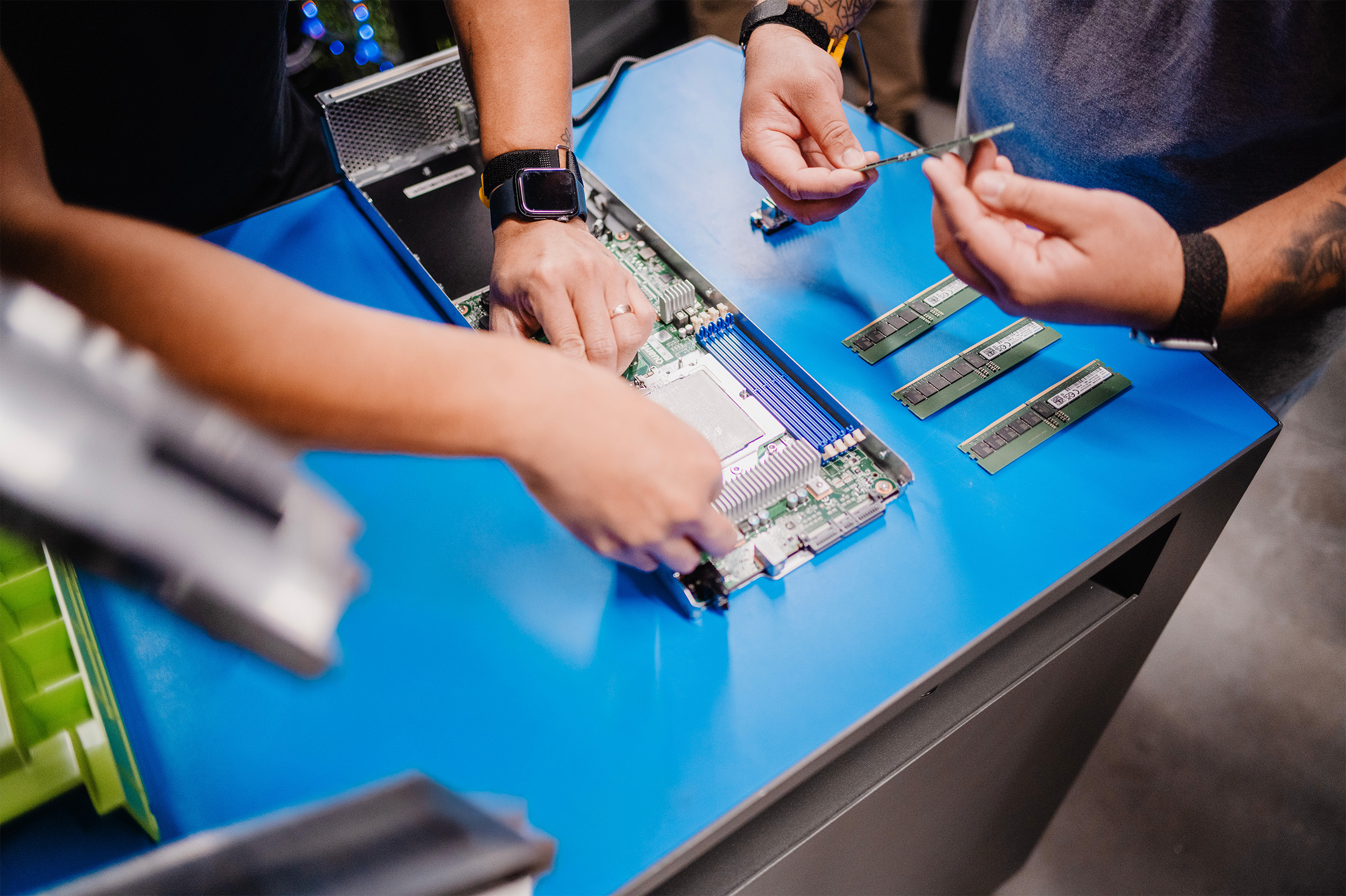
We practice circularity by extending the useful life of our servers, promoting the reuse of components, and by encouraging responsible recycling pathways for materials that cannot be repurposed.
We continue to work with our engineering and supply chain teams to identify lower-impact materials and opportunities for dematerialization in new server and rack designs.
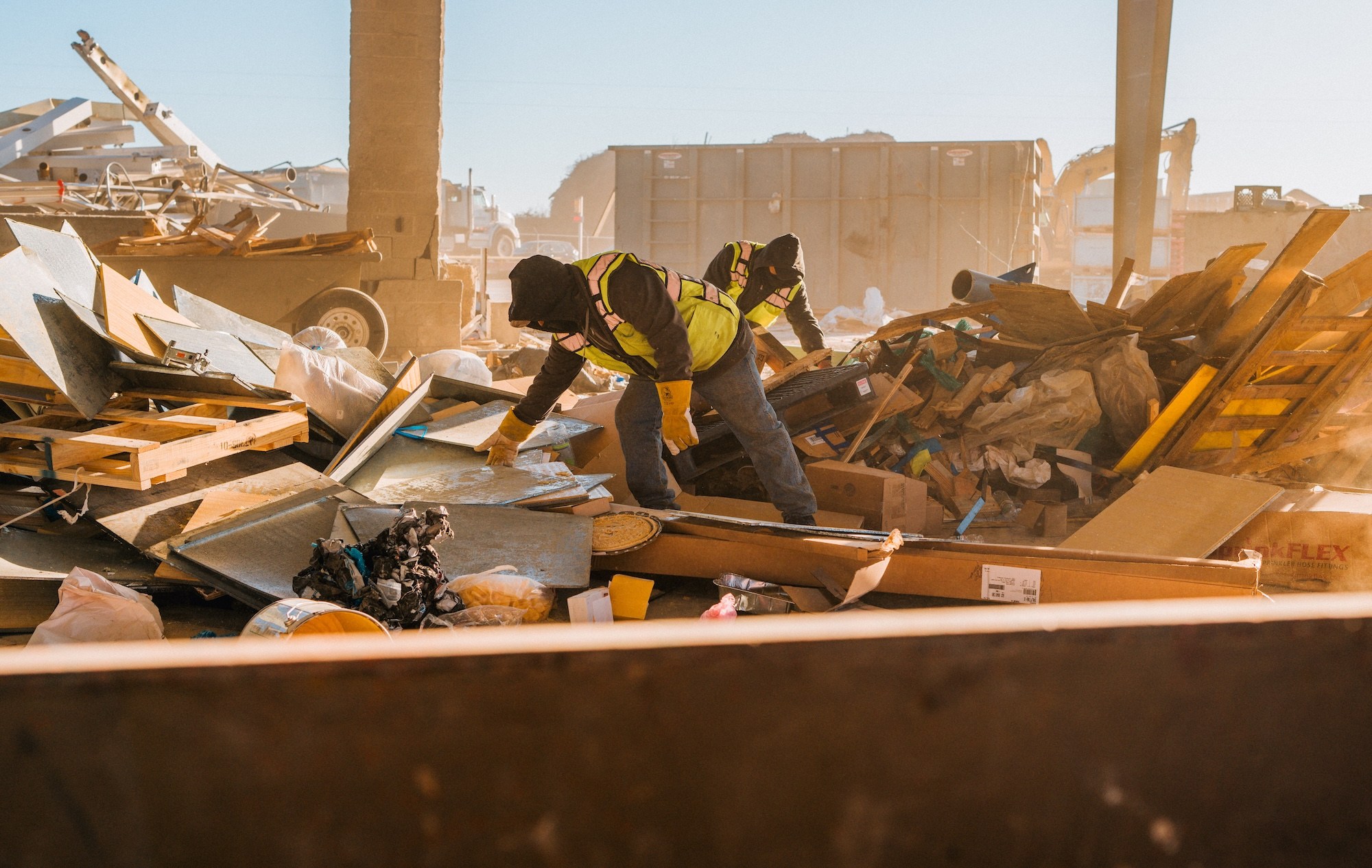
Every site is required to recycle or reuse concrete, asphalt, masonry, metal, wood, and cardboard as part of our baseline waste diversion program. Where locally available and feasible, sites expand beyond these core materials and push diversion rates higher by leveraging regional recycling infrastructure and partnerships.
Consumer product circularity
We integrate circular practices into our hardware design and manufacturing processes, prioritizing material reduction, evaluating lower-impact alternatives, and designing components that can support longer product lifecycles.
-

Two business people standing in server room with laptop and discussing Material optimization
We evaluate opportunities to reduce overall material use, incorporate more sustainable material choices, and design products for durability and ease of maintenance. This approach supports more efficient use of materials across the product lifecycle, helping to reduce waste generation and extend product longevity, and aligns to our broader circularity strategy.
-
Sustainable packaging
We design packaging with renewable materials, recyclability, and carbon efficiency in mind. Recent consumer hardware packaging designs use simplified, paper-based formats that reduce the amount of plastic and mixed-material components, making it easier for users to recycle packaging at home.
-

Product trade-in
Meta launched a product trade-in program that enables customers to trade in unwanted or previous-generation devices in exchange for credit toward the purchase of Meta AI glasses. This program is designed to extend product lifecycles and encourage more responsible material management by providing a convenient pathway for customers to return used devices.

E-Waste
Meta supports the responsible trade-in, reuse, and recycling of electronic equipment. This includes maintaining an e-waste program. Program efforts are guided by Our Materials of Concern Standard and Electronic Reuse and Recycling Standard, which establishes requirements for vendors and sub-vendors handling electronic equipment and waste on behalf of Meta.
Dig deeper
These are just a few highlights. Read the full sustainability report for more details.